Knowing that I have some sort of copy of the old D&D handbook 'Deities & Demigods', I had hoped to scan a picture of the Cthuhlu pages into my last HP Lovecraft blog post. But while searching D&D online today for other unnamed and unspeakable reasons, I came across this chestnut from an old favorite blog page, Something Awful. I think these guys cover the topic well enough as is!
Dungeons & Dragons: Deities & Demigods (Cthulhu Edition)
Enjoy!
Sunday, March 13, 2011


Thursday, March 10, 2011
Cthulhu Mythos (or How I Learned To Love the Yuggoth)
1920's
HP Lovecraft: Tales
H.P. Lovecraft! YES! I had no familiarity with this man's writings beyond knowing that he was an under-appreciated horror writer, friend of the guy who created Conan , and had a primary monster, Cthulhu, which I was hard pressed to get much information about online.
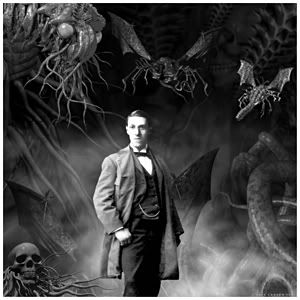
And there's the beauty of Lovecraft. To learn about the forbidden mysteries of his universe will leave you a wrecked, insane man. Turns out our world is teeming with all sorts of alien, inter-dimensional, ancient magical monsters and under-world gods who are biding their time to take our brains into outer space, turn our children into giant retards, subjugate mankind into subservience and just generally creep us out. But you rarely get to see these guys! Mostly you just hear their names in ancient forbidden texts, hear some scraping sounds, have the eerie feeling that you're being watched in your sleep, and then you find out your professor friend who had been studying the Necronomicon has disappeared leaving nothing behind but some spongy green footprints on his rug. It's the fact that Lovecraft leaves the best parts of his creations to the imagination which has helped fuel both his popularity, as well as the popular conceit that his wild and ficticious tales are, in fact, a way of covering up very real events and creatures.

The sad part of Lovecraft's legacy is the lack of movie adaptations- a lack both in quantity and quality. I recently tried watching the movie In Search of Lovecraft and was horribly bored and disinterested by the home-movie quality of it; I'm sure it was just about to get interesting, too. To be honest, I haven't checked out everything there is on DVD, I think there is a documentary that ought to be worthwhile. The stiff writing style, heavy focus on scientific pondering over action, and overall trend toward UNHAPPY ENDINGS makes Lovecraft very hard to adapt. In a suprising twist of timeliness, the recent big budget adaptation of Lovecraft's 'At the Mountains of Madness'
 by Guillermo del Toro has just been cancelled, or at least put on hold. Why? Because del Toro wants an R rating. I guess I understand the concept that adult movies bring in less money than Toy Story, but would anyone question making a Saw
 movie or Stephen King
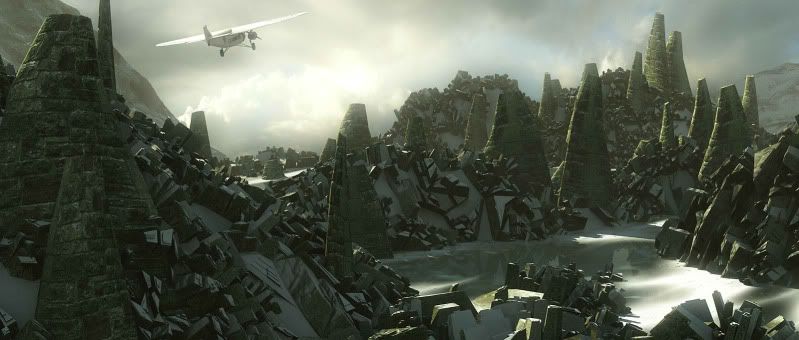
 movie R rated? It's HORROR, people. Making a Lovecraft film family-friendly would assure low profits- because it would SUCK. Sure, the bulk of the movie may be scientists struggling to survive in the artic and then exploring a deserted alien city... but it wouldn't be Lovecraft if they didn't eventually stumble upon something that would make the audience scream and then throw up all that popcorn they ate.
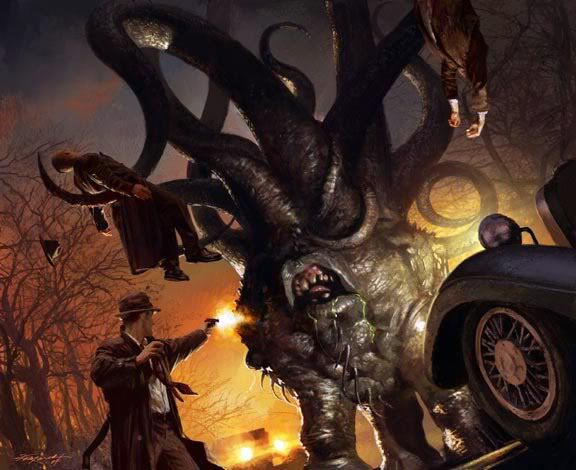
Book review-wise, it's hard to recommend Lovecraft even when you love him. Aside from a stiff 1920's writing style, a lot of his stories involve some doctor-type finding an old dusty journal that belonged to some old doctor-type who has written detailed notes on his research. After reading that type of turn of the century prose long enough to nearly fall asleep ten times, someone gets their brain removed or turns into a monster and you're wondering WTF. So the truth is it's a lot of work to read, and the overall theme that the protagonists generally wish themselves dead after gaining knowledge of the universe around them makes Lovecraft hard to feel warm and fuzzy about. But nonetheless, it is awesome.
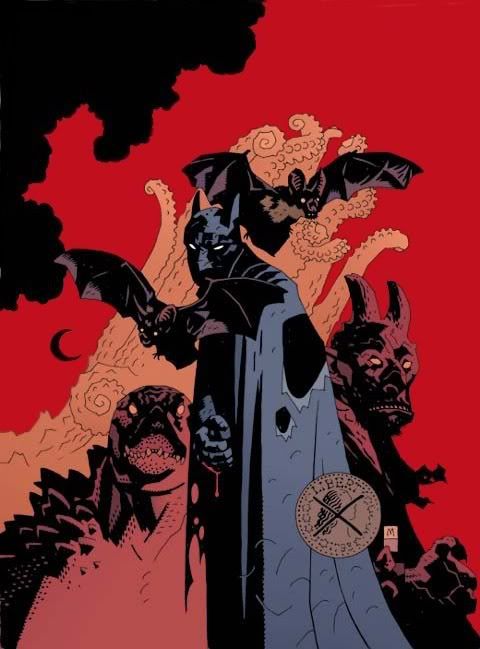
Given Lovecraft's moderate success, he would probably have not imagined the inspiration most modern horror writers attribute to him now. For a guy like me who gets off on esoteric references and crossover, Lovecraft's world is a playland of multidimensional and magical possibilities. Some of his creations were featured in the first two editions of the D&D Dieties and Demigods handbooks. There is a Call of Cthulhu
 Lovecraft RPG game where the only way to win is to gain knowledge of the unknown, and consequently all player characters go insane upon winning the game. I could go on and on. But as far as crossovers go, let's just say that it's no coincidence that Batman's local asylum
 is named after a town in Lovecraft's books that hosts quite a few bizarre inhabitants. And if memory serves, Lovecraft was fond of inserting sly references to the Hyborian Age of Conan, as much as Howard slyly inserted dark gods from the netherworld into his writings, and actually wrote a few Cthulhu stories himself.
 The book series I am currently reading, The Illuminatis! Trilogy
 , contains heavy Lovecraft referencing, as well as references to a lot of my other blog content as part of- well, I'll save that for another post.
In conclusion- while HP Lovecraft may not fit the fancy of readers of contemporary pop horror, or fans of slasher flicks and torture-porn, true devotees of the occult and things that go bump in the middle of the night need to get schooled on the master.
HP Lovecraft: Tales
H.P. Lovecraft! YES! I had no familiarity with this man's writings beyond knowing that he was an under-appreciated horror writer, friend of the guy who created Conan
, and had a primary monster, Cthulhu, which I was hard pressed to get much information about online.
And there's the beauty of Lovecraft. To learn about the forbidden mysteries of his universe will leave you a wrecked, insane man. Turns out our world is teeming with all sorts of alien, inter-dimensional, ancient magical monsters and under-world gods who are biding their time to take our brains into outer space, turn our children into giant retards, subjugate mankind into subservience and just generally creep us out. But you rarely get to see these guys! Mostly you just hear their names in ancient forbidden texts, hear some scraping sounds, have the eerie feeling that you're being watched in your sleep, and then you find out your professor friend who had been studying the Necronomicon has disappeared leaving nothing behind but some spongy green footprints on his rug. It's the fact that Lovecraft leaves the best parts of his creations to the imagination which has helped fuel both his popularity, as well as the popular conceit that his wild and ficticious tales are, in fact, a way of covering up very real events and creatures.

The sad part of Lovecraft's legacy is the lack of movie adaptations- a lack both in quantity and quality. I recently tried watching the movie In Search of Lovecraft
and was horribly bored and disinterested by the home-movie quality of it; I'm sure it was just about to get interesting, too. To be honest, I haven't checked out everything there is on DVD, I think there is a documentary that ought to be worthwhile. The stiff writing style, heavy focus on scientific pondering over action, and overall trend toward UNHAPPY ENDINGS makes Lovecraft very hard to adapt. In a suprising twist of timeliness, the recent big budget adaptation of Lovecraft's 'At the Mountains of Madness' by Guillermo del Toro has just been cancelled, or at least put on hold. Why? Because del Toro wants an R rating. I guess I understand the concept that adult movies bring in less money than Toy Story, but would anyone question making a Saw movie or Stephen King movie R rated? It's HORROR, people. Making a Lovecraft film family-friendly would assure low profits- because it would SUCK. Sure, the bulk of the movie may be scientists struggling to survive in the artic and then exploring a deserted alien city... but it wouldn't be Lovecraft if they didn't eventually stumble upon something that would make the audience scream and then throw up all that popcorn they ate.
Book review-wise, it's hard to recommend Lovecraft even when you love him. Aside from a stiff 1920's writing style, a lot of his stories involve some doctor-type finding an old dusty journal that belonged to some old doctor-type who has written detailed notes on his research. After reading that type of turn of the century prose long enough to nearly fall asleep ten times, someone gets their brain removed or turns into a monster and you're wondering WTF. So the truth is it's a lot of work to read, and the overall theme that the protagonists generally wish themselves dead after gaining knowledge of the universe around them makes Lovecraft hard to feel warm and fuzzy about. But nonetheless, it is awesome.

Given Lovecraft's moderate success, he would probably have not imagined the inspiration most modern horror writers attribute to him now. For a guy like me who gets off on esoteric references and crossover, Lovecraft's world is a playland of multidimensional and magical possibilities. Some of his creations were featured in the first two editions of the D&D Dieties and Demigods
handbooks. There is a Call of Cthulhu Lovecraft RPG game where the only way to win is to gain knowledge of the unknown, and consequently all player characters go insane upon winning the game. I could go on and on. But as far as crossovers go, let's just say that it's no coincidence that Batman's local asylum is named after a town in Lovecraft's books that hosts quite a few bizarre inhabitants. And if memory serves, Lovecraft was fond of inserting sly references to the Hyborian Age of Conan, as much as Howard slyly inserted dark gods from the netherworld into his writings, and actually wrote a few Cthulhu stories himself. The book series I am currently reading, The Illuminatis! Trilogy, contains heavy Lovecraft referencing, as well as references to a lot of my other blog content as part of- well, I'll save that for another post.
In conclusion- while HP Lovecraft may not fit the fancy of readers of contemporary pop horror, or fans of slasher flicks and torture-porn, true devotees of the occult and things that go bump in the middle of the night need to get schooled on the master.
Wednesday, February 23, 2011
A Barnstormer in Oz
1919
We return to Oz courtesy of Phillip Jose Farmer. Barnstormer falls somewhere between the convoluted sequels of the original books and the adult-skewed Wicked series with PJ's take on the land of Oz. Farmer sets the groundrules of his version of Oz quickly: Oz is real, but so are the books by Baum, who interviewed Dorothy and turned her story into a successful series of fantasy books for children. Where the original books describe Oz as a hidden land existing in the real world, Farmer drops a dimensional portal to transport his protagonist, Dorothy's grown son.

Having read the Wicked series so recently, I couldn't help but compare the two. They are both similiar in that they attempt to flesh out Oz with a grown-up dose of realism, and a blatant sexuality. But the differences are too great. You can tell that McGuire was either completely unaware of this prior version (likely) or had read it and set out to be as contrary as possible (possible). Glenda is very different, Ozma is non-existant, the politics are topsy-turvy, the talking animals are different, the Scarecrow is very different... you get the idea.
How to reconcile this in a crossover context? Like always- parallel universes of Oz! I'd feel more nerdy about this issue except that Farmer is the Forefather of Crossover Fiction. If there can be 6,667 versions of Earth as we know it, constantly diverging, merging and experiencing crisis that require artistic retcons, why not multiple realities of Oz, disparate enough to have their own warped versions of storybook and adulterized realities (let's not even get into The Wiz or Tin Man
 !)
The best part of old-school seventies writers like PJ Farmer is his tendancy to dissect every nuance of every character and situation. Sometimes this gets too carried away, though, and bogs down the pace of the story too much, as I've noted in my Riverworld reviews. However, in Barnstormer it is put to good use, as Farmer puts a microscope on the existance of Dorothy's friends. Just how is a talking scarecrow and tin man possible, even in a world of magic? Their existance is an anomoly, a fact that all other Oz historians choose to ignore.

Despite my inability to merge this Oz with other versions of Oz, or accept it as the real Oz as PJ might like, it's a great book with a nice fusion of post WWI warfare and magic, and is a great follow-up to Wicked versus the lame sequals from it's own author.
We return to Oz courtesy of Phillip Jose Farmer.
 Barnstormer falls somewhere between the convoluted sequels of the original books and the adult-skewed Wicked series with PJ's take on the land of Oz. Farmer sets the groundrules of his version of Oz quickly: Oz is real, but so are the books by Baum, who interviewed Dorothy and turned her story into a successful series of fantasy books for children. Where the original books describe Oz as a hidden land existing in the real world, Farmer drops a dimensional portal to transport his protagonist, Dorothy's grown son.

Having read the Wicked series so recently, I couldn't help but compare the two. They are both similiar in that they attempt to flesh out Oz with a grown-up dose of realism, and a blatant sexuality. But the differences are too great. You can tell that McGuire was either completely unaware of this prior version (likely) or had read it and set out to be as contrary as possible (possible). Glenda is very different, Ozma is non-existant, the politics are topsy-turvy, the talking animals are different, the Scarecrow is very different... you get the idea.
How to reconcile this in a crossover context? Like always- parallel universes of Oz! I'd feel more nerdy about this issue except that Farmer is the Forefather of Crossover Fiction. If there can be 6,667 versions of Earth as we know it, constantly diverging, merging and experiencing crisis that require artistic retcons, why not multiple realities of Oz, disparate enough to have their own warped versions of storybook and adulterized realities (let's not even get into The Wiz
or Tin Man!)The best part of old-school seventies writers like PJ Farmer is his tendancy to dissect every nuance of every character and situation. Sometimes this gets too carried away, though, and bogs down the pace of the story too much, as I've noted in my Riverworld reviews. However, in Barnstormer it is put to good use, as Farmer puts a microscope on the existance of Dorothy's friends. Just how is a talking scarecrow and tin man possible, even in a world of magic? Their existance is an anomoly, a fact that all other Oz historians choose to ignore.

Despite my inability to merge this Oz with other versions of Oz, or accept it as the real Oz as PJ might like, it's a great book with a nice fusion of post WWI warfare and magic, and is a great follow-up to Wicked versus the lame sequals from it's own author.
Tuesday, February 8, 2011
COO
There is, in fact, less satisfaction than one would imagine in being "let down easy" by the COO.
 Let me back up a little. The CEO is the boss. It's a serious sounding title that conveys power and control. When, in actuality, many CEO's are merely figure heads. Boardroom puppets. Stuffed suits. The CEO of my company is a really cool guy who should be admired by all the pretend-faker CEO's out there who love to parade around like corporate peacocks and squawk quotes suited for inspirational breakroom posters featuring kittens or sunrises or the like.
And the CEO of the company I work for, is also smart enough to allow the COO of the company I work for, to actually operate the company.
It's the COO who really calls the shots. Everybody knows that. You'd probably rather play golf with the CEO. But it's the COO that you desperately want to impress.
 And a couple of weeks ago the COO interviewed me for a promotion. A promotion that I ultimately did not get. And she sent me an email at 4:55 on Friday afternoon, asking me to join her in her office...where she delivered the crushing blow.
My cubicle is just 50 yards from her office. Which was just enough distance for me to work up a recovery scenario as I walked proudly toward her corner of the office suite. I smiled at the faces of the perimeter cubiclites as they watched me strut by. They all knew. But the folks I work with are respectful and they were sincerely empathetic to my plight. As I passed each cubicle I expected the possibility of smug, unkind grins as they shuffled papers and rearranged office supplies on their desks, trying to look busy the last few minutes of the week. All of them wearing coats, their lunch boxes and purses ready to go. Or maybe they'd rattle tin cups up against the bars of their cells, catcalling, using mirrors to catch a glimpse of my deadman walk. But they all ignored me. Either they are all nice people. Or they're just as consumed with their own disappointment as I was with the dismantling I was about to experience.
 The COO would have made a job offer to the winning candidate on Wednesday or Thursday; and then made sure the offer was accepted before letting the losers know. She would not be calling me to her office with five minutes left in the work week to give me good news....she is a decent person. She was beckoning me at the 11th hour so that I didn't have to squirm all weekend long wondering about the result of the decision that she would have surely known that I am smart enough to have already surmised.
So I thought to myself, "COO....that's a funny sounding title".
And the CEO of the company I work for, is also smart enough to allow the COO of the company I work for, to actually operate the company.
It's the COO who really calls the shots. Everybody knows that. You'd probably rather play golf with the CEO. But it's the COO that you desperately want to impress.
And a couple of weeks ago the COO interviewed me for a promotion. A promotion that I ultimately did not get. And she sent me an email at 4:55 on Friday afternoon, asking me to join her in her office...where she delivered the crushing blow.My cubicle is just 50 yards from her office. Which was just enough distance for me to work up a recovery scenario as I walked proudly toward her corner of the office suite. I smiled at the faces of the perimeter cubiclites as they watched me strut by. They all knew. But the folks I work with are respectful and they were sincerely empathetic to my plight. As I passed each cubicle I expected the possibility of smug, unkind grins as they shuffled papers and rearranged office supplies on their desks, trying to look busy the last few minutes of the week. All of them wearing coats, their lunch boxes and purses ready to go. Or maybe they'd rattle tin cups up against the bars of their cells, catcalling, using mirrors to catch a glimpse of my deadman walk. But they all ignored me. Either they are all nice people. Or they're just as consumed with their own disappointment as I was with the dismantling I was about to experience.
So I thought to myself, "COO....that's a funny sounding title".
More Remarkable Men
Forgive me, Devoted Readers of the Quorum. I have posted an entry to the sacred blog about mystic Gurdjieff's book, Meeting with Remarkable Men , but I neglected to mention the movie adaptation. And I even copped a picture from it!
Never one to pass up an obscure but strange and funny YouTube video, I ran in a running (and remarkable) way to the nearest Google Video search and immediately found this gem from the Peter Brook film.
Usually when my buddies and I get together, we have some beers, listen to some tunes and play some darts or other game. Man, what a waste! To think that all this time the gentlemen or their parent organization, PFAC, could have been growing out our beards and practicing this dance!! Dude. I am ashamed and disgraced that my friends and I are unable to reproduce this performance in it's full glory. From here on out, I will devote myself to learning these intense and mystical movements.
, but I neglected to mention the movie adaptation. And I even copped a picture from it!Never one to pass up an obscure but strange and funny YouTube video, I ran in a running (and remarkable) way to the nearest Google Video search and immediately found this gem from the Peter Brook film.
Usually when my buddies and I get together, we have some beers, listen to some tunes and play some darts or other game. Man, what a waste! To think that all this time the gentlemen or their parent organization, PFAC, could have been growing out our beards and practicing this dance!! Dude. I am ashamed and disgraced that my friends and I are unable to reproduce this performance in it's full glory. From here on out, I will devote myself to learning these intense and mystical movements.
Friday, February 4, 2011
Meetings with Remarkable Men
1877-1927
Meetings with Remarkable Men
Hmmm. Most of the books I read are either books that I have hunted down because I read or heard something somewhere that lead me to believe I would enjoy it, or because it came in the giant load of books my wife bought the day she walked into a bookstore going out of business nine years ago and said "I'll take the entire science-fiction section for $40". This book, however, was given to me by a lady at the church I used to go to whose husband used to be a rocket scientist. Although he was as old as the hills, I had one or two conversations with him about sci-fi, and he was unsuprisingly very well read in the greats of the genre, and made a few suggestions which I can't specifically remember but am sure I jotted down and added to the timeline.

His wife gave me a stack of books as they were planning on moving away from the Aspen-Carbondale area and she just wanted rid of junk. This is the only one I have read so far, as it takes place at the turn of the century. I read it a year and a half ago, and it really didn't make enough of an impression on me to speak about it off the cuff.

Hence, my Living Social/Goodreads review:
I agree that many of the stories contained within this semi-autobiographical history are far-fetched, and Gurdjieff's tangent-prone style alternates between fascinating and frustrating as hell. Nonetheless this book will inspire every would-be scholar and entrepanuer. A good read!
Hmmm. Well, I liked it at the time, I guess. I recall that the book flows back and forth from essays on people the dude knew during his lifetime to actual stories about his life (in a mostly chronological manner). I suppose that any one who has lived a full life could sit down and list the most amazing things that ever happened to them, and a lot of it would sound far-fetched. I plan on writing that book about my own life one day. My recommendation is a bit vague, though, don't you think? Would-be scholars? Whatever. The more I stare at that phrase, the more lame it sounds.

I guess... don't go search this book out. Nine out of ten people who read it did not experience a miraculous change in their life, despite reading about a lot of cool stuff the guy did through hard work and persistance. BUT, if a cool old lady with an even cooler old husband hands the book to you and you find it in your hands one day, check it out for sure.
In my next post, we return to Oz!
Tuesday, February 1, 2011
Baltimore, or The Steadfast Tin Soldier and the Vampire
1914-1918
Baltimore, or The Steadfast Tin Soldier and the Vampire
Mike Mignola, or at least his flagship character, Hellboy , achieved celebrity status with a highly successful underground comic series which spawned a highly successful series of movies
 which spawned a semi-successful series of animated movies
 and Superbowl commercials.

Mignola draws equally upon the writings of Hans Christian Anderson and Bram Stoker to tell the fable of a World War I soldier who incurs the wrath of a powerful vampire. (By the way, you skipped that Hans Christian link, didn't you? Shame on you. Go back and check out that website. It's so worth it, trust me.) Mignola's recognizable artwork marks this as a graphic novel, but it is more of an illustrated novel, really. In terms of review, the novel hits the aura of gothic-ness it aims for right between the bloodshot and hypnotizing eyes, but it's format of seperate stories breaks up the flow and relies on a theme of overbearing misery which makes it hard for the reader to invest themselves at times.

In terms of my timeline, this book is my only mark of the first world war. That being the case, it's important to mark WWI as a time of vampire infestation and plague. And only 21 years after Drac caught a boat to London.

I know that Baltimore is reappearing in comics or other media, and I welcome it. Although the story is dismal and slowgoing for fans of Wesley Snipes at a blood-rave, the artwork and character of Lord Baltimore the Vampire Hunter is great horror-fun.
Baltimore, or The Steadfast Tin Soldier and the Vampire
Mike Mignola, or at least his flagship character, Hellboy
, achieved celebrity status with a highly successful underground comic series which spawned a highly successful series of movies which spawned a semi-successful series of animated movies and Superbowl commercials.
Mignola draws equally upon the writings of Hans Christian Anderson and Bram Stoker to tell the fable of a World War I soldier who incurs the wrath of a powerful vampire. (By the way, you skipped that Hans Christian link, didn't you? Shame on you. Go back and check out that website. It's so worth it, trust me.) Mignola's recognizable artwork marks this as a graphic novel, but it is more of an illustrated novel, really. In terms of review, the novel hits the aura of gothic-ness it aims for right between the bloodshot and hypnotizing eyes, but it's format of seperate stories breaks up the flow and relies on a theme of overbearing misery which makes it hard for the reader to invest themselves at times.

In terms of my timeline, this book is my only mark of the first world war. That being the case, it's important to mark WWI as a time of vampire infestation and plague. And only 21 years after Drac caught a boat to London.

I know that Baltimore is reappearing in comics or other media, and I welcome it. Although the story is dismal and slowgoing for fans of Wesley Snipes at a blood-rave, the artwork and character of Lord Baltimore the Vampire Hunter is great horror-fun.
Tuesday, January 25, 2011
The League of Extraordinary Gentlemen: Century: 1910
1910
Although I read The League of Extraordinary Gentlemen: Century: 1910 just a year ago, I am already fuzzy on the details. Alan Moore discarded the use of easy chronological volumes after vol. 2, and started jumping around in the time stream as well as jumping around in style, prose and the use of storytelling as a way of telling a story. Although some of the results are brilliant in my estimation, many of the faithful became disenchanted quickly. Looking up obscure fictional characters starts losing its charm when you've never heard of them and aren't convinced they were worthy of reincarnation. This particular book had almost 650 ratings on Goodreads, and nearly 100 reviews written, most of them bad. And, well, I gotta say I agree.

We do get to see some familiar characters, and the development of some pretty good new characters (namely Nemo's daughter "Pirate Jenny" and Orlando, an immortal multi-gender member of the League). There are a few other teasers of Oliver Haddo and storylines to be further developed in the ever-postponed conclusion to the Century trilogy. But mostly the story drags, the characters fail to elicit wonder or excitement and if Moore was going for a down-beat mid-chapter ala' The Two Towers
 or the Empire Strikes Back
 , he missed the mark- which would be having the reader give a crap.

If I had the time or resources, I would expand this blog entry to highlight some of my recurring characters and how they fit into this story. But the truth is - and it hurts me to say this about one of my favorite writers and one of my favorite series - this comic is weak and not worthy of taking time away from things in my real life like scrubbing toilets or packing a sack lunch for work tomorrow.
Friday, January 21, 2011
Lets Talk About Robots
They're awesome. In theory. And not really even in theory. As far as I can tell, the theories we've come up with so far to apply to the robot solution, are falling short of our imaginational expectations. Just as Asimov invented most of the shit we know about robots today: I just made up the word imaginational.
IBM's Watson is a Jeopardy playing supercomputer that's billed as the next great step for robotkind. And although it's computing prowess is impressive....it still only renders answers. And even a Magic 8 Ball can answer questions.
 Sony pretty much put a halt on it's robot program. Qrio, pictured left, was just too expensive. They closed up shop on this bulky aluminum elf in 2006, layed off 10,000 people and reorganized Sony to focus on more viable endeavors.
Sony has never been as relevant as when the audio tape cassette was king of the music media world. Who didn't LOVE their Walkman? If they had just installed a tapedeck in Qrio's chest...they probably could have kept this ball rolling. Or at least an iPod charging station...
 If there is any positive news to report about robotics, its in the field of Camel racing.
Camel racing in Dubai took a turn toward dubious this season when child camel jockies were replaced by robot jockies. Not only do the mechanical riders have the advantage of shock absorption and GPS; but when they fall off the stampeding dromedaries, their little heads do not get crushed like cantaloupes.
I think that greyhound racing should also feature little tiny robot jockies. Just sayin'.
IBM's Watson is a Jeopardy playing supercomputer that's billed as the next great step for robotkind. And although it's computing prowess is impressive....it still only renders answers. And even a Magic 8 Ball can answer questions.
Sony has never been as relevant as when the audio tape cassette was king of the music media world. Who didn't LOVE their Walkman? If they had just installed a tapedeck in Qrio's chest...they probably could have kept this ball rolling. Or at least an iPod charging station...
Camel racing in Dubai took a turn toward dubious this season when child camel jockies were replaced by robot jockies. Not only do the mechanical riders have the advantage of shock absorption and GPS; but when they fall off the stampeding dromedaries, their little heads do not get crushed like cantaloupes.
I think that greyhound racing should also feature little tiny robot jockies. Just sayin'.
Tuesday, January 18, 2011
The Magician
1908
The Magician
I had to read this book online. I couldn't find a hard copy anywhere for a reasonable price. Since I didn't own a Kindle or IPad or laptop or anything cool like that at the time, and being that I'm too cheap to print it out (and thought that would be a lame way to read it, anyway) I was forced to sit in front of a desktop computer like a savage and read this book on the internet, where it exists in it's entirety. So being that I couldn't read it on a plane, in the bathroom, at bedtime or while eating cereal, it took me forever to actually get through the damn thing. And like a lot of old Victorian fiction I wondered more than once if it was going to be worth it.
Turns out it was.
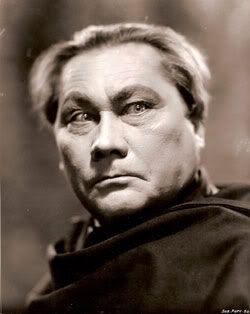
The villian, Oliver Haddo, is a thinly disguised Aleister Crowley, and both the real dark-arts magician as well as this fictional alter-ego reoccur as an influence in a lot of the stuff I read. Haddo himself appears occasionally in other literature (including, unsuprisingly, the League of Extraordinary Gentlemen ). Maugham, who is better known for his book Of Human Bondage
 , allegedly met Crowley once and found him to be unlikable. So he wrote a book demonizing the guy to the nth degree. I mean, Haddo is vile. So Crowley wrote an editorial criticising both the book and his treatment in it. But he wrote the editorial under the psuedonym Oliver Haddo. I imagine he did so as an ironic jab at Maugham, but in the long run I think he only solidified the relationship between the two identities.
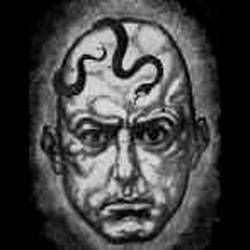
The foil to Haddo is his old collegiate acquantance, Dr. Porhoet. Porhoet ties the story together through his friendship with the younger main characters, whose names I can't recall because it's really not that important. Dr. Porhoet is essentially a Van Helsing stand-in, and a poor one at that. He does nothing to protect the main characters, chooses to give no advice rather than risk giving bad advice, and basically exposes the innocent young lovers of the story to Haddo. Where Van Helsing was a knowledgable hero, Porhoet waits until it is truly too late to do anything practical and attempt to atone for his passive inaction throughout the novel. What a lame-ass.
The nameless main characters are nonetheless likable and carry on a love triangle type of story that almost holds a good deal of interest in itself. Well, almost. Their run-ins with the loathsome and despicable Oliver Haddo are exciting, vulgar, mysterious and full of arcane Satanic esoterica that proves the amount of time Maugham spent in libraries doing his homework on black magic. But the long periods of time where the characters do nothing much but anguishing over their passive aggressive relationships and doing too little too late to resolve any but the simplest of problems drags the story down.
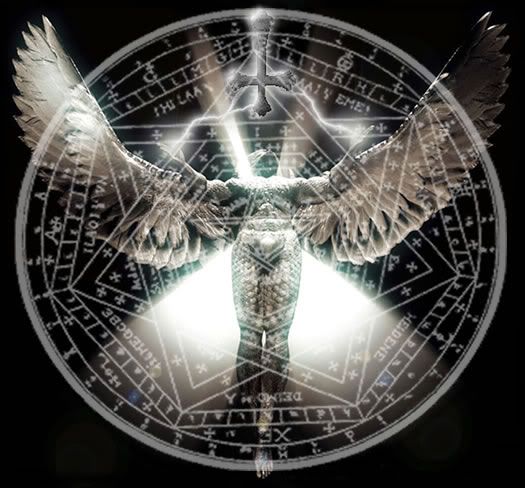
I strongly recommend this book to fans of the occult. Where casual readers will lose interest quickly due to the slow pace and narrow theme, dark magic affectionados will savor every mention of historical and mythological esoteric-a. The ending will touch the heart of HP Lovecraft fans as the work of Haddo is exposed for a gruesome abomination that must have sickened readers at the turn of the century. Overall I didn't give this book a super awesome rating, but it still earned it's loving place in my crossover universe timeline.
SPECIAL BONUS:
Rex Ingram made a 1926 movie adaptation of the book, and I have served up a slice of yummy silent black and white film footage video clip for you. Try to figure out who are the young lovers (Arthur and Maggie, I think are their names!) and who is the evil Oliver Haddo. If you can't figure it out, the captions will surely clear everything up.
Although I do remember a snake charmer scene in the novel, I can't testify that there was a sailor, balloon hat guy or that the story took place in Germany.
The Magician
I had to read this book online. I couldn't find a hard copy anywhere for a reasonable price. Since I didn't own a Kindle or IPad or laptop or anything cool like that at the time, and being that I'm too cheap to print it out (and thought that would be a lame way to read it, anyway) I was forced to sit in front of a desktop computer like a savage and read this book on the internet, where it exists in it's entirety. So being that I couldn't read it on a plane, in the bathroom, at bedtime or while eating cereal, it took me forever to actually get through the damn thing. And like a lot of old Victorian fiction I wondered more than once if it was going to be worth it.
Turns out it was.

The villian, Oliver Haddo, is a thinly disguised Aleister Crowley, and both the real dark-arts magician as well as this fictional alter-ego reoccur as an influence in a lot of the stuff I read. Haddo himself appears occasionally in other literature (including, unsuprisingly, the League of Extraordinary Gentlemen
). Maugham, who is better known for his book Of Human Bondage, allegedly met Crowley once and found him to be unlikable. So he wrote a book demonizing the guy to the nth degree. I mean, Haddo is vile. So Crowley wrote an editorial criticising both the book and his treatment in it. But he wrote the editorial under the psuedonym Oliver Haddo. I imagine he did so as an ironic jab at Maugham, but in the long run I think he only solidified the relationship between the two identities.
The foil to Haddo is his old collegiate acquantance, Dr. Porhoet. Porhoet ties the story together through his friendship with the younger main characters, whose names I can't recall because it's really not that important. Dr. Porhoet is essentially a Van Helsing stand-in, and a poor one at that. He does nothing to protect the main characters, chooses to give no advice rather than risk giving bad advice, and basically exposes the innocent young lovers of the story to Haddo. Where Van Helsing was a knowledgable hero, Porhoet waits until it is truly too late to do anything practical and attempt to atone for his passive inaction throughout the novel. What a lame-ass.
The nameless main characters are nonetheless likable and carry on a love triangle type of story that almost holds a good deal of interest in itself. Well, almost. Their run-ins with the loathsome and despicable Oliver Haddo are exciting, vulgar, mysterious and full of arcane Satanic esoterica that proves the amount of time Maugham spent in libraries doing his homework on black magic. But the long periods of time where the characters do nothing much but anguishing over their passive aggressive relationships and doing too little too late to resolve any but the simplest of problems drags the story down.

I strongly recommend this book to fans of the occult. Where casual readers will lose interest quickly due to the slow pace and narrow theme, dark magic affectionados will savor every mention of historical and mythological esoteric-a. The ending will touch the heart of HP Lovecraft fans as the work of Haddo is exposed for a gruesome abomination that must have sickened readers at the turn of the century. Overall I didn't give this book a super awesome rating, but it still earned it's loving place in my crossover universe timeline.
SPECIAL BONUS:
Rex Ingram made a 1926 movie adaptation of the book, and I have served up a slice of yummy silent black and white film footage video clip for you. Try to figure out who are the young lovers (Arthur and Maggie, I think are their names!) and who is the evil Oliver Haddo. If you can't figure it out, the captions will surely clear everything up.
Although I do remember a snake charmer scene in the novel, I can't testify that there was a sailor, balloon hat guy or that the story took place in Germany.
Subscribe to:
Posts (Atom)